
 Image 1 of 1
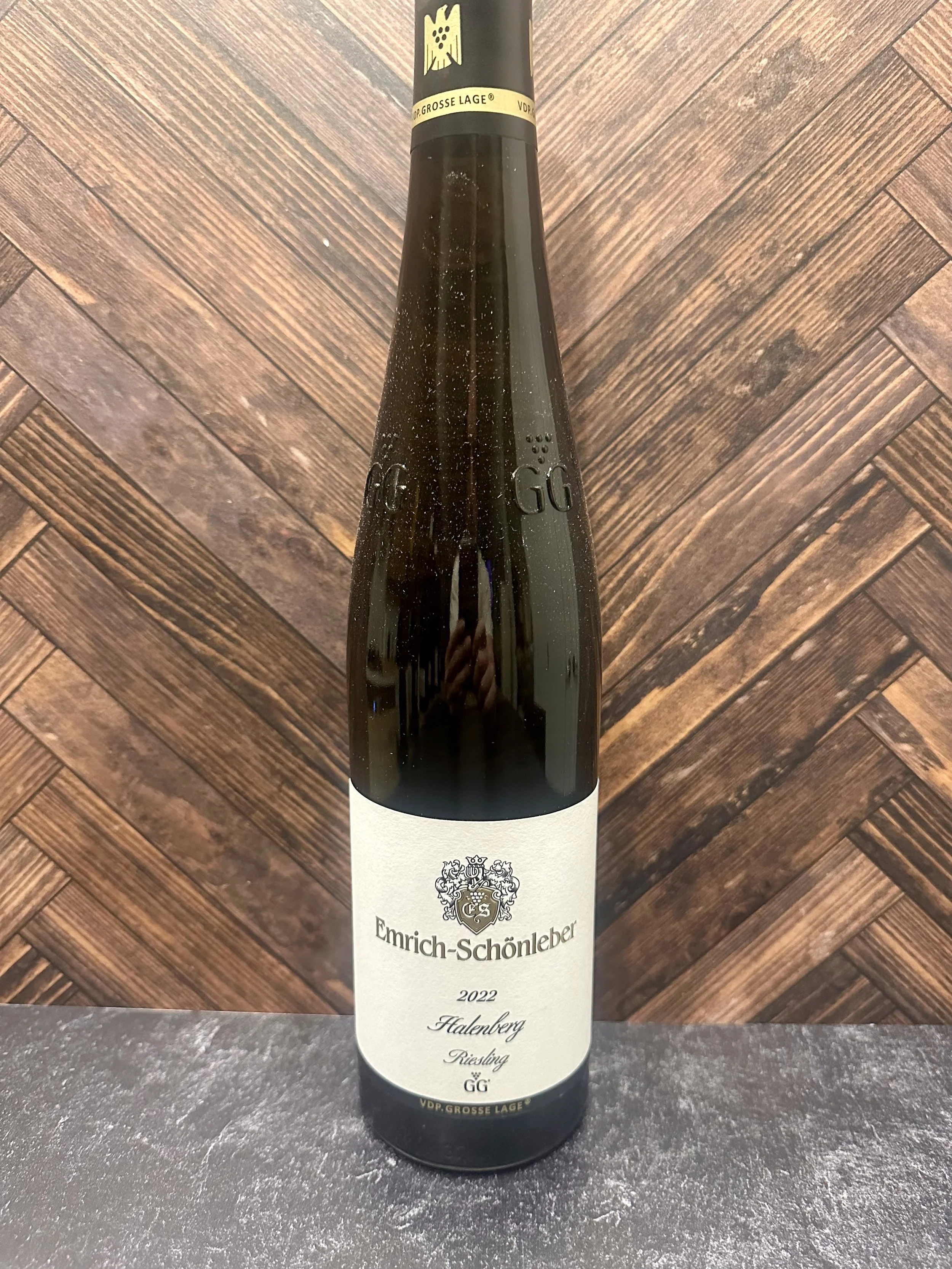
Halenberg is the smallest location in Monziger and lies east of the town at up to 220 m above sea level. The 35-70% steep slope, with its south-southwest orientation, is characterized by rising warm, thermal currents. The cold fall winds blowing from the Soonwald at night, on the other hand, are intercepted by the slightly inclined hill above the vineyard and directed towards Bad Sobernheim. This protects the special microclimate of this location from cooling down too much at night. The soil comes from a conglomerate, which is mainly composed of blue slate, quartzite and pebbles. It hardly contains any loamy parts and is therefore very easy to warm up, but tends to be dry in summer. This leads to small-berried, aromatic grapes that are only attacked by noble rot when they are very ripe, much later than with plump grapes. Not only the particularly mineral, dry wines, but also the noble sweet wines from this location are therefore characterized by particularly clear, fine fruit notes. (Source: vdp.de)
Halenberg is the smallest location in Monziger and lies east of the town at up to 220 m above sea level. The 35-70% steep slope, with its south-southwest orientation, is characterized by rising warm, thermal currents. The cold fall winds blowing from the Soonwald at night, on the other hand, are intercepted by the slightly inclined hill above the vineyard and directed towards Bad Sobernheim. This protects the special microclimate of this location from cooling down too much at night. The soil comes from a conglomerate, which is mainly composed of blue slate, quartzite and pebbles. It hardly contains any loamy parts and is therefore very easy to warm up, but tends to be dry in summer. This leads to small-berried, aromatic grapes that are only attacked by noble rot when they are very ripe, much later than with plump grapes. Not only the particularly mineral, dry wines, but also the noble sweet wines from this location are therefore characterized by particularly clear, fine fruit notes. (Source: vdp.de)